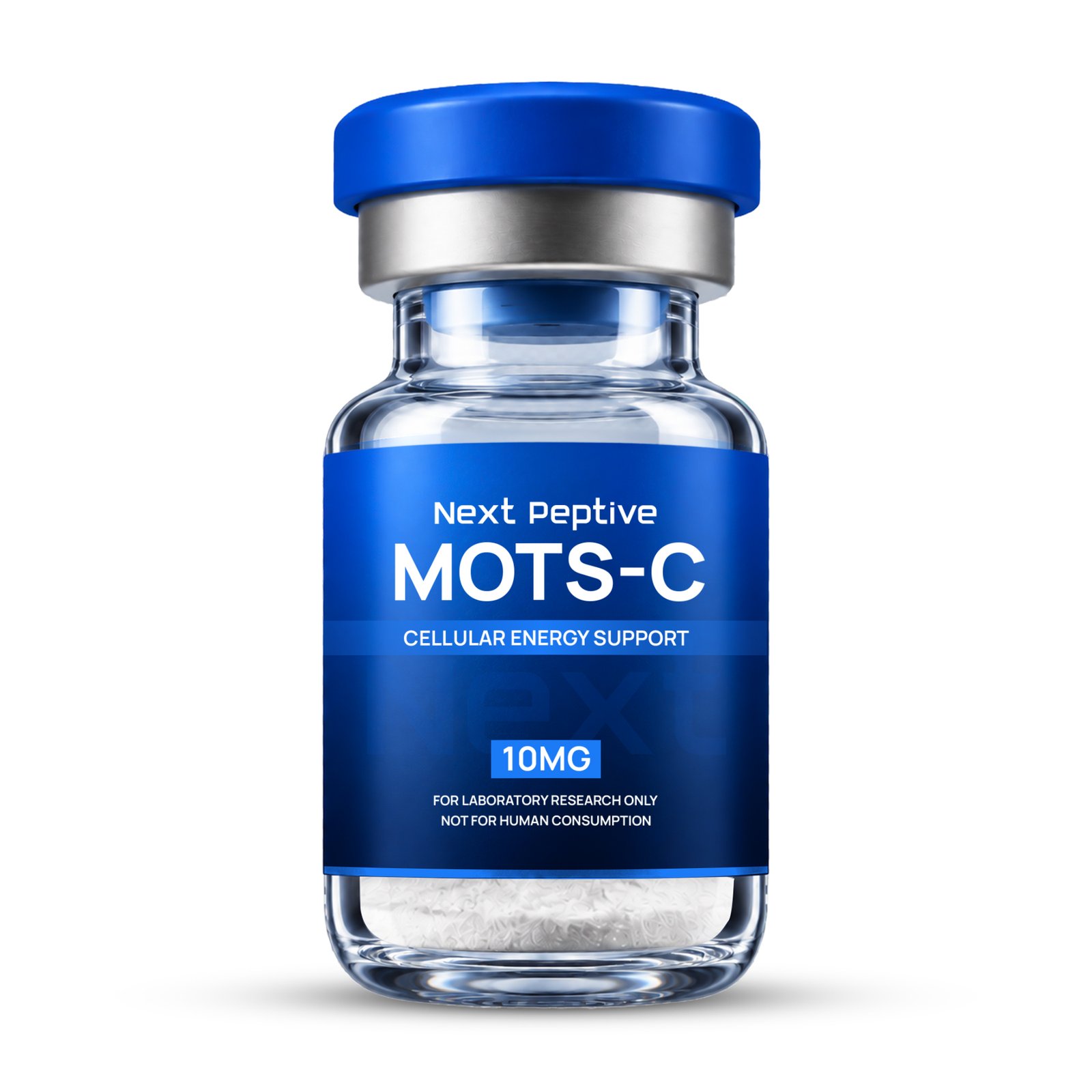
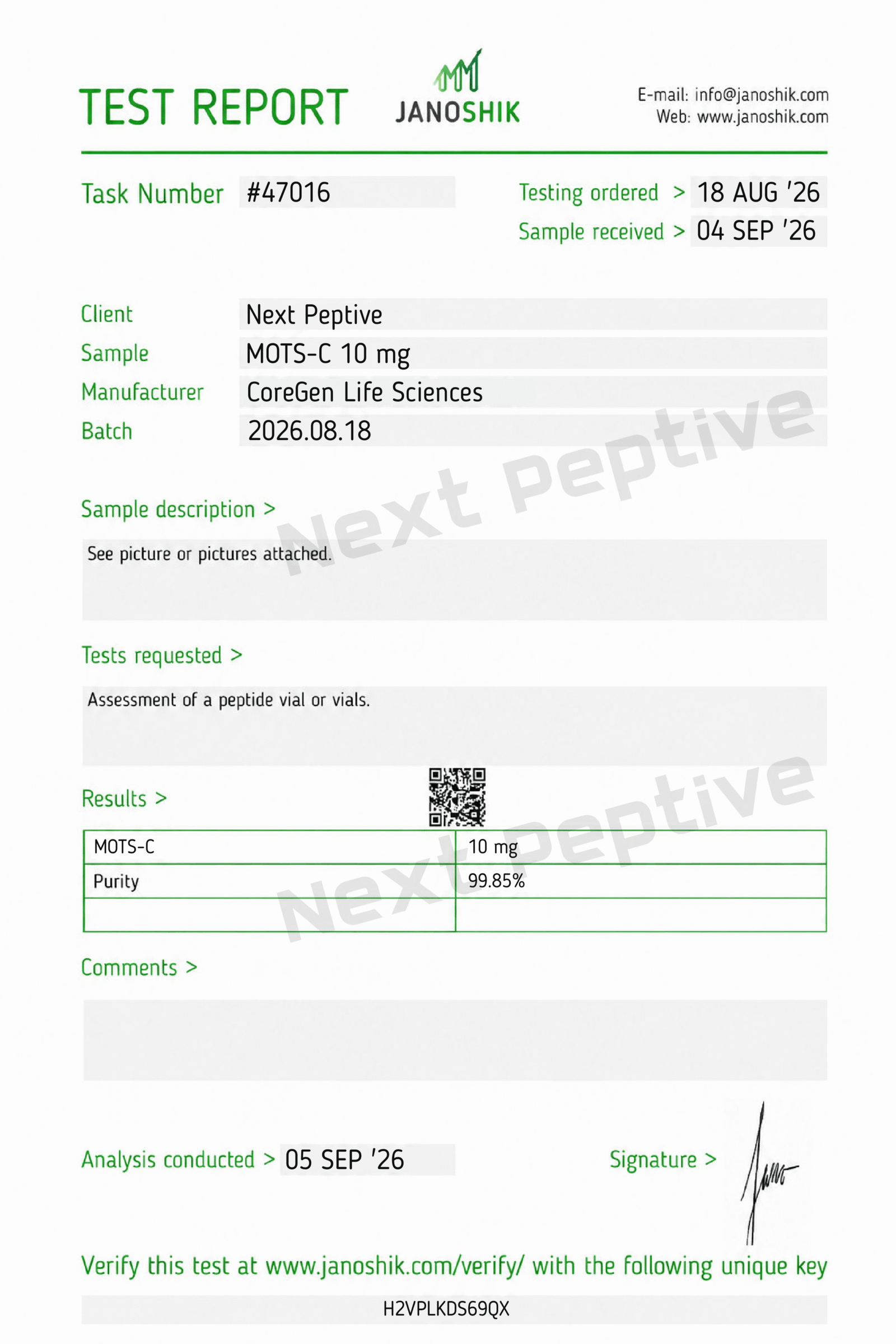
Product Overview
MOTS-C is a short, mitochondrial-derived peptide consisting of 16 amino acids. Unlike many peptides encoded by nuclear DNA, MOTS-C originates from a region of mitochondrial DNA, making it a subject of interest in research investigating mitochondrial signaling and cellular energy regulation.
MOTS-C has been investigated in laboratory and preclinical research relating to metabolic signaling, mitochondrial function, cellular stress responses, and exercise physiology. Current research remains primarily focused on cellular and animal models rather than established human therapeutic applications.
Research Focus
Research involving MOTS-C has explored areas including:
- Mitochondrial signaling and cellular energy regulation
- AMPK-related signaling pathways
- Metabolic adaptation
- Insulin-sensitivity research
- Exercise physiology
- Cellular stress responses
- Age-related mitochondrial function
- Metabolic processes in laboratory models
Scientific Background
MOTS-C is of particular scientific interest because of its proposed role in communication between mitochondria and the nucleus. Research has examined its relationship with cellular energy sensing and AMPK-associated signaling, particularly under conditions involving metabolic stress or changes in energy availability.
Laboratory and animal studies have also investigated MOTS-C in relation to mitochondrial signaling, metabolic regulation, and cellular adaptation. These findings remain within the research setting and should not be interpreted as evidence of established human therapeutic effects.
Research Applications
MOTS-C has been investigated across several areas of experimental research, including:
Metabolic Research
Studies have examined MOTS-C in relation to insulin sensitivity, energy regulation, and metabolic signaling in laboratory models.
Exercise Physiology
Researchers have investigated changes in MOTS-C associated with physical activity and metabolic stress to better understand its potential role in cellular adaptation.
Mitochondrial Research
Its mitochondrial origin makes MOTS-C relevant to studies investigating mitochondrial communication, energy metabolism, and age-related changes in mitochondrial function.
Research Status
Current evidence surrounding MOTS-C remains largely preclinical, with substantial research conducted using cellular and animal models. The available research does not establish MOTS-C as a proven treatment for any medical condition in humans.
Research-Use-Only Notice
This product is intended solely for laboratory and in-vitro research purposes and is not for human or animal consumption.
It is not intended to diagnose, treat, cure, or prevent any disease. Information concerning experimental research findings should not be interpreted as medical, therapeutic, or dosage guidance.
Important Information
This product is supplied strictly for research and laboratory applications.
It has not been established as an approved human therapeutic product. The uploaded source specifically notes that MOTS-C is not TGA-approved for human therapeutic use and does not appear on the ARTG.
The purchaser is responsible for appropriate handling, storage, and use in accordance with applicable laws and laboratory requirements.
Next Peptive makes no claims regarding the safety, efficacy, or suitability of this material for applications outside a controlled research environment.
Research use only. Not for human or animal consumption. Not intended to diagnose, treat, cure, or prevent any disease.